


In short
- B2B decisions are made by groups: 13 internal stakeholders and nine external participants on average (Forrester, 2026); buying groups of five to 16 people (Gartner, 2025).
- 74% of buying teams show unhealthy conflict, and groups that reach consensus are 2.5 times more likely to report a high-quality deal (Gartner, 2025). Clear, tailored material helps them agree.
- Buyers want less of you early: 67% prefer a rep-free experience (Gartner, 2026). Your documents have to do the talking, in print and digital, as one consistent system.
Think about the last big job you won or lost. Now think about who was involved. Not the person you met. The other ones: the one who controls the budget, the one who has to live with the result, the one who worries about risk, the one who asks why not the cheaper company. You never met most of them. They met your sell sheet.
Buying is a team sport now, and you are not on the field
Forrester’s State of Business Buying 2026 reports that, on average, 13 internal stakeholders and nine external participants influence a B2B buying decision1. Gartner’s research puts buying groups at five to 16 people across as many as four functions, and found that 74% of those teams show “unhealthy conflict” during the decision: conflicting objectives, disagreement on the best course of action, or being overruled by outside decision-makers2. Buyers drew on an average of seven information sources in a recent buying decision3.
Here is what should change how you think about collateral. Gartner found that buying groups that reach consensus are 2.5 times more likely to report a high-quality deal, and that messages tailored to the buying group or the organization help build that consensus2. What helps a divided group agree is not a clever slogan. It is clear, credible, shareable information that every person can read in their own terms.
A buying committee does not decide on your pitch. It decides on what survives being forwarded.
And buyers want less of you early, not more. Gartner’s 2026 data says 67% prefer a rep-free experience4. That is not a reason for sellers to disappear; Gartner also found 69% of buyers still turn to sales reps to validate AI-generated insights3. It is a signal that your materials must do more of the early work, so that the later conversation is easy.
| Source | Finding |
|---|---|
| Gartner, 2025 | Buying groups of 5 to 16 people; 74% show unhealthy conflict |
| Forrester, 2026 | 13 internal stakeholders and 9 external participants on average |
| Gartner, 2026 | Average of 7 information sources per buying decision |
At a glanceYour pitch is forwarded, not performed. Every person in that group reads it in their own terms, which is why one clear, credible, consistent document beats five mismatched ones.
Four pain points we hear from owners
Your pitch depends on you being in the room
If the story only works when you tell it, it dies the moment someone forwards a PDF. The best explanation of your work lives in your head, or in the one salesperson who has it down, and not on the page the committee is actually reading.
What it feels like: losing to a company with a weaker product and a better one-pager.
Every document looks like a different company
A brochure from years ago, a deck made for a trade show, a quote on a word-processor template: each made at a different time by a different person. Stanford’s credibility guidelines call for a professional look suited to your purpose and for avoiding errors of every kind, even small ones5. Inconsistency is a small error repeated on every page.
What it feels like: a little flinch every time you attach something to an email.
It was written for the person you met, not the five you did not
Your champion loves the engineering. Finance wants the risk. Operations wants lead times. Safety wants certifications. One page rarely answers all of them, which is how a buying group drifts into the conflict Gartner measured2.
What it feels like: a great first meeting, then silence.
Nobody can find it, read it on a phone, or trust it
The PDF is buried in an email from March. It is unreadable without pinching and zooming. The file is named something like final-v7-REAL. Print and digital look like two different companies, and nothing points back to your website.
What it feels like: knowing the right material exists somewhere, and not being able to put it in front of the right person in the moment.
How designed collateral fixes it
We design the materials a buying committee actually uses, in print and digital, as one system: brochures, sell sheets, pitch decks, PDFs and business documents.
| The pain | What we build |
|---|---|
| Depends on you being in the room | Sell sheets and decks written to stand on their own: what you do, who it is for, proof, and the next step. |
| Looks like different companies | One visual and verbal system across brochure, sell sheet, deck, PDF and business documents. |
| Written for one person | Content organized around the questions each role asks (technical, commercial, risk, delivery) so the same core story answers all of them. |
| Cannot find it, read it or trust it | Clean PDFs with sensible file names, phone-readable layouts, print-ready files, and links back to your website so everything points to one place. |
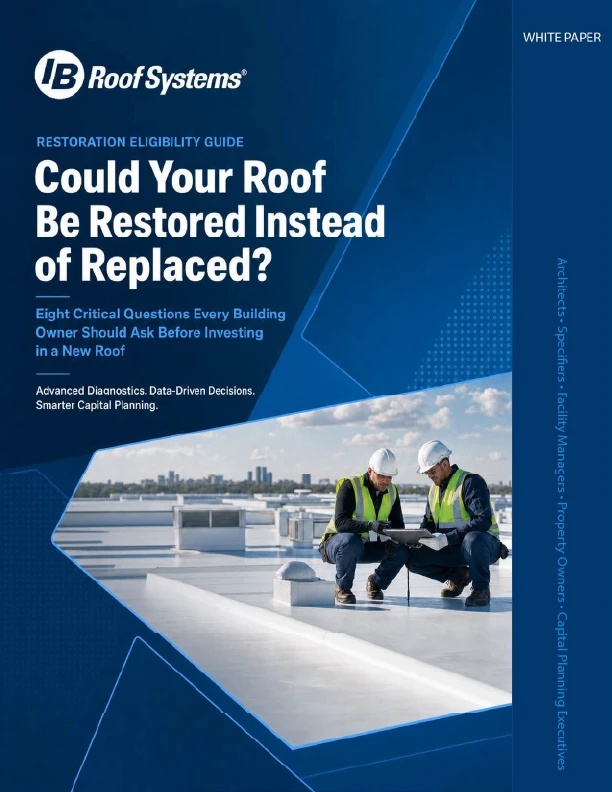
You can see real examples we have designed, including a manufacturing capability deck, an engineering sell sheet, a metal fabrication e-brochure and a roofing white paper, in the collateral viewer on our home page.
The forwardable test
Try this on the materials you have today. It takes twenty minutes.
- The stranger test. Hand your sell sheet to someone outside your industry. In 30 seconds, can they say what you do and who it is for?
- One next step. Is there a clear way to reach you on every page?
- Proof, not adjectives. Are claims backed by something checkable, such as certifications, process, and the kinds of projects you do?
- Every role answered. Would finance, operations, safety and technical each find their question addressed?
- The phone test. Open the PDF on a phone. Can you read it without pinching?
- The side-by-side. Put brochure, deck and website next to each other. Is it one company or three?
- The inbox test. Is the file name something you would be proud to see land in a stranger’s inbox?
Questions owners ask
What is the difference between a brochure, a sell sheet and a capability deck?
A brochure tells a broader story, often over several pages, in print and digital. A sell sheet is a single sheet built to be forwarded, focused on one offer or capability. A capability deck is a slide-format presentation of who you are, what you make or do, how you work and why buyers can trust you, used in meetings and sent ahead of them.
Does print still matter if buyers research digitally?
Both matter. Buyers research digitally, but printed pieces still show up at trade shows, on counters and in meetings. We design them as a set so print and digital look and read like the same company.
Can you redesign the materials I already have?
Yes. We can redesign what you have or build new pieces, and bring them into one consistent system with your website and LinkedIn presence.
How do I start?
Use the form on our home page and ask for a free demo. Tell us what is not working and we will explain where to begin. We reply by email, usually the same or next business day.
Ready to give your pitch a voice when you are not in the room?
Ask for a free demo and tell us which documents are holding you back. Nothing to pay to start.
Build my free demo Not sure where to startKeep reading
Sources
- Forrester: B2B buying and AI in 2026 (reporting Forrester's State of Business Buying, 2026). Digital Commerce 360, January 22, 2026. https://digitalcommerce360.com/2026/01/22/forrester-b2b-buying-ai-2026/
- Gartner Sales Survey Finds 74% of B2B Buyer Teams Demonstrate "Unhealthy Conflict" During the Decision Process. Gartner press release, May 7, 2025. https://www.gartner.com/en/newsroom/press-releases/2025-05-07-gartner-sales-survey-finds-74-percent-of-b2b-buyer-teams-demonstrate-unhealthy-conflict-during-the-decision-process
- Gartner Survey Finds 69% of B2B Buyers Turn to Sales Reps to Validate AI-Generated Insights. Gartner press release, May 20, 2026. https://www.gartner.com/en/newsroom/press-releases/2026-05-20-gartner-survey-finds-sixty-nine-percent-of-b-two-b-buyers-turn-to-sales-reps-to-validate-ai-generated-insights
- Gartner Sales Survey Finds 67% of B2B Buyers Prefer a Rep-Free Experience. Gartner press release, March 9, 2026. https://www.gartner.com/en/newsroom/press-releases/2026-03-09-gartner-sales-survey-finds-67-percent-of-b2b-buyers-prefer-a-rep-free-experience
- Stanford Guidelines for Web Credibility. Stanford Web Credibility Project (Persuasive Technology Lab). https://credibility.stanford.edu/guidelines/index.html Accessed October 8, 2026.
Statistics are third-party findings, quoted as the publishers reported them and linked above. Gartner’s search-volume figure is a forecast, not a measurement. LinkedIn audience figures are LinkedIn’s own. We make no promise of specific rankings, citations or results.